Best Resume Section Order: What to Put First for ATS and Recruiters
Learn the best resume section order for experience, skills, projects, education, certifications, and custom sections based on your career stage.
Open Resume Kit Team · · 4 min read
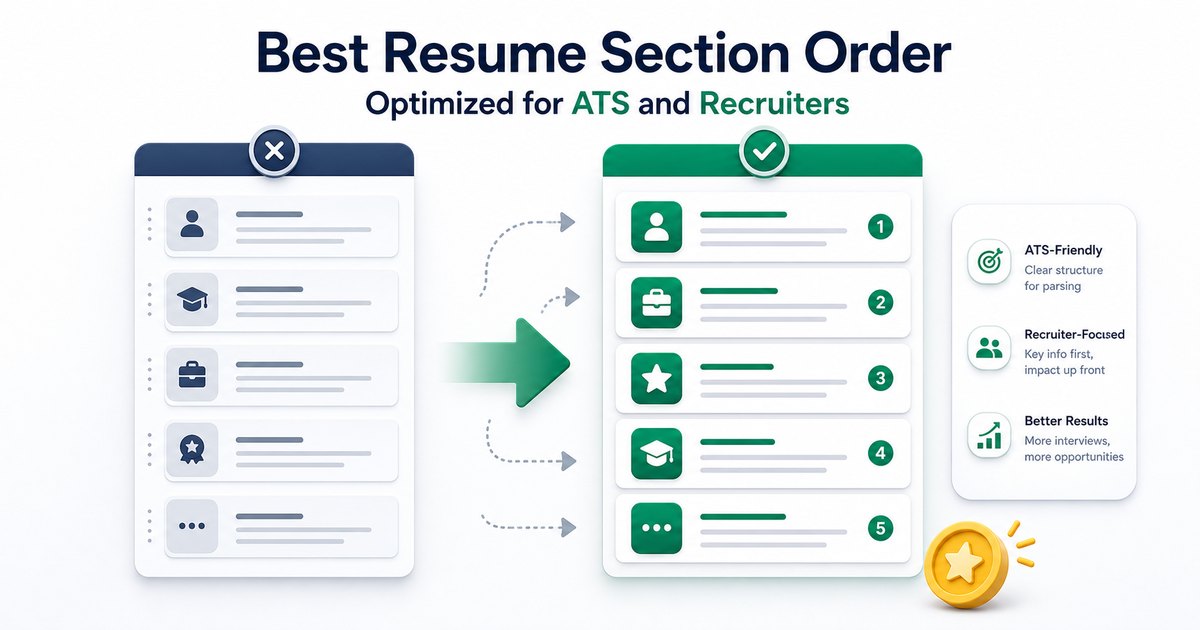
When recruiters review your resume, they spend an average of just six seconds scanning it. In that brief window, the order of your sections can make the difference between landing an interview and being passed over. Understanding how to strategically organize your resume sections is one of the most overlooked yet powerful optimization techniques.
Why Resume Section Order Matters
Recruiters don't read resumes linearly from top to bottom. Instead, they scan for the most relevant information first. By strategically placing your strongest qualifications at the top, you immediately capture their attention and demonstrate your value. The wrong section order can bury your best achievements under less relevant information, causing you to be overlooked.
Research shows that the first section a recruiter sees receives the most attention. If that section doesn't immediately showcase your fit for the role, you've already lost the opportunity to make a strong first impression. This is why section order is not just a formatting preference—it's a strategic decision that directly impacts your interview chances.
The Standard Resume Section Order
Most professional resumes follow this proven structure:
1. Contact Information and Header
Your contact information should appear at the very top of your resume. Include your full name (in a larger font), phone number, professional email address, city and state, and LinkedIn profile URL. Some candidates also include a personal website or portfolio link. Keep this section clean and easy to scan—recruiters need to find your contact details instantly.
2. Professional Summary or Objective
A compelling professional summary (2-3 lines) immediately tells recruiters who you are and what you bring to the table. This section should be tailored to the specific job you're applying for, highlighting your most relevant skills and achievements. A strong summary acts as your elevator pitch, giving recruiters a reason to keep reading.
3. Work Experience
Your work experience section should be positioned prominently, typically as the third section. List your positions in reverse chronological order (most recent first), with company name, job title, dates, and 3-5 achievement-focused bullet points for each role. This section is where you demonstrate your impact and prove you can do the job.
4. Skills
Your skills section should include both hard skills (technical abilities) and soft skills (communication, leadership). Organize skills by category if you have many, and prioritize skills that match the job description. This section helps both human recruiters and ATS systems identify your qualifications.
5. Education
List your educational background in reverse chronological order, including degree type, institution name, graduation date, and relevant coursework or honors. If you're a recent graduate, education might be positioned higher. If you have extensive work experience, education typically appears lower on the resume.
How to Customize Section Order
The standard order works well for most candidates, but your specific situation might call for adjustments. Career changers should place relevant skills prominently. Recent graduates can position education higher. Senior professionals should emphasize work experience and leadership.
With advanced resume builders like Open Resume Kit, you can drag sections between columns to customize the order instantly. This flexibility allows you to test different layouts and find the order that best showcases your qualifications.
Conclusion
Resume section order is not a minor formatting detail—it's a strategic element that directly impacts your interview chances. By understanding how to organize your sections for maximum impact and using tools that give you flexibility to customize, you can create a resume that captures recruiter attention and effectively showcases your qualifications.
Start building your perfectly organized resume today with Open Resume Kit.